


From survey to operation
Services: as-built survey, BIM, planning and CAFM data
Everything we do starts with the same survey and ends where you need it: at the drawing, at the model, at the building application or in day-to-day operation. Six service areas, one body of data.
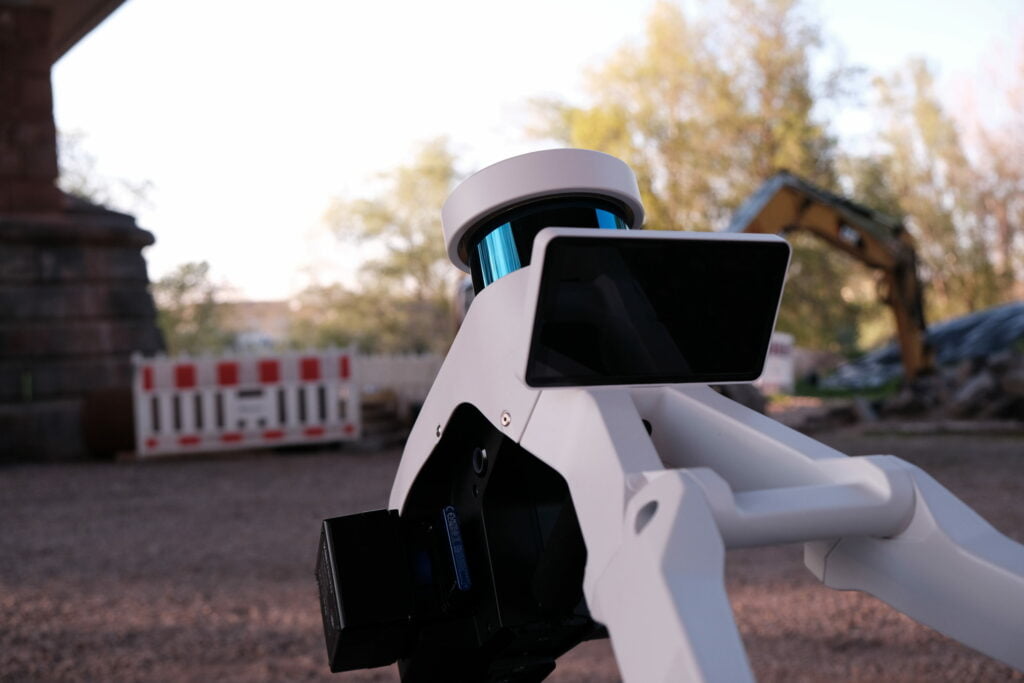
We are laser scanning specialists3D laser scanning of buildings
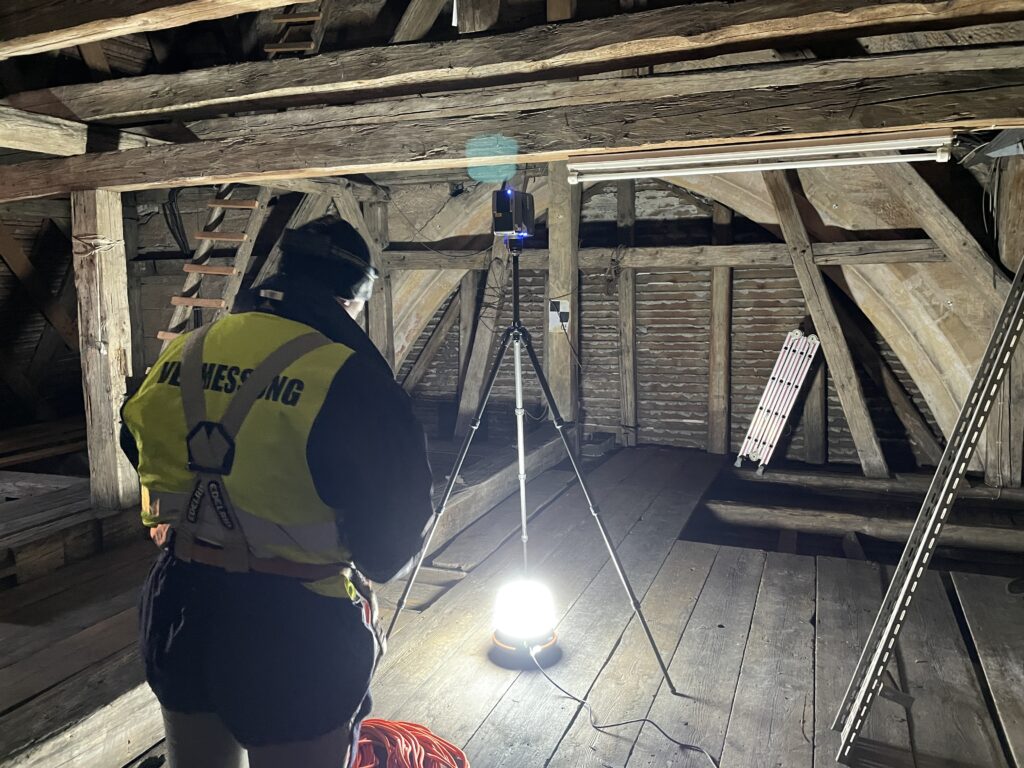
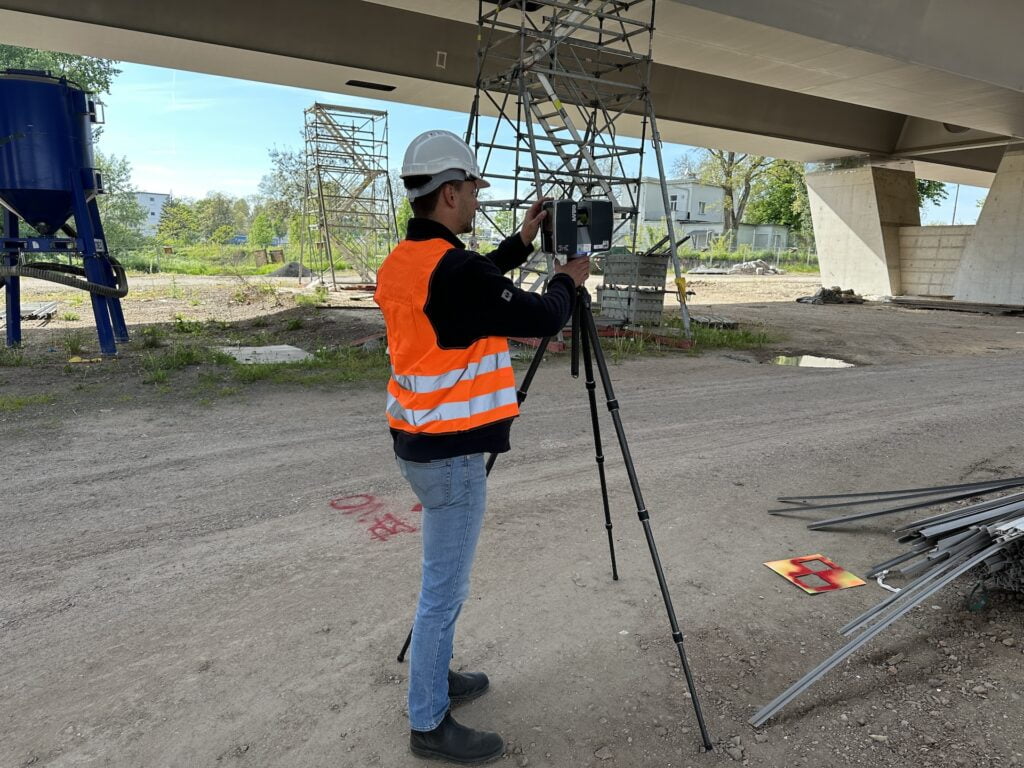
Producing high-quality point clouds of buildings of every kind is our profession. With our terrestrial laser scanners we track down the details of a structure — as accurately as the state of the art allows. With our mobile mapping scanners we capture large estates in record time, without having to interrupt day-to-day operation. Laser scanning is the basis for (almost) all our downstream services.
The right planning basis for every projectDigital as-built plans
We are convinced that every good project begins with accurate planning. That is why we specialise in producing 3D models and new drawings of existing structures of every kind.
From building sites and complexes to factories and plants. Put your planning on solid ground. In two or three dimensions.
Every project should build on a dependable planning basis. Here we explain how and why.
Does someone really have to drive out there? No, of course not. Virtual tours and digital twins
We do not simply want to sell you a service.
We want to help you improve your organisation and save resources in the process.
We achieve that by digitising your property management. Being able to walk a site online, together with different stakeholders, saves time and people.
The built-in measuring tool allows area and length measurements accurate to the centimetre. Our tours are not merely panoramic photographs — a laser scan underlies them. And on top of a laser scan, a virtual tour can be produced with minimal additional effort.
Find out more about property management in a new dimension.
Deformation-accurate surveys
Unlike conventional measuring methods, 3D laser scanning captures not just individual points but entire surfaces, and therefore delivers a deformation-accurate result. The scanner produces point densities of several million points per square metre and creates a coloured, three-dimensional point cloud of reality.
And where does all that data come from? We produce it. Building data capture for CAFM
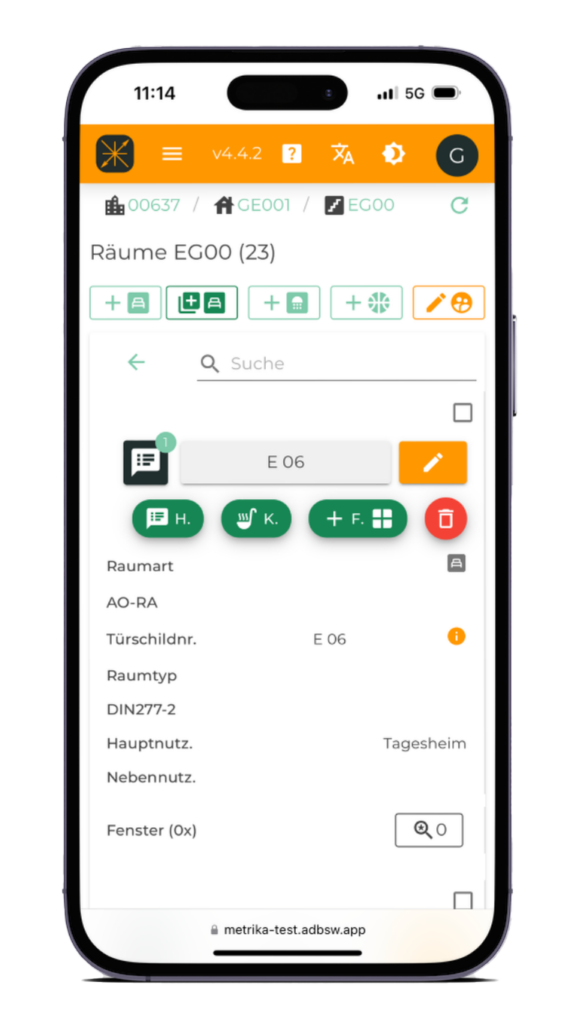
Every system is only as good as the data underneath it. While we capture your portfolio with the mobile mapping system, we record the alphanumeric building information with our DokuApp.
The application runs in the browser on any smartphone and can be configured to your database structure. Various export options allow the captured data to be merged with data from a CAD program, for example.
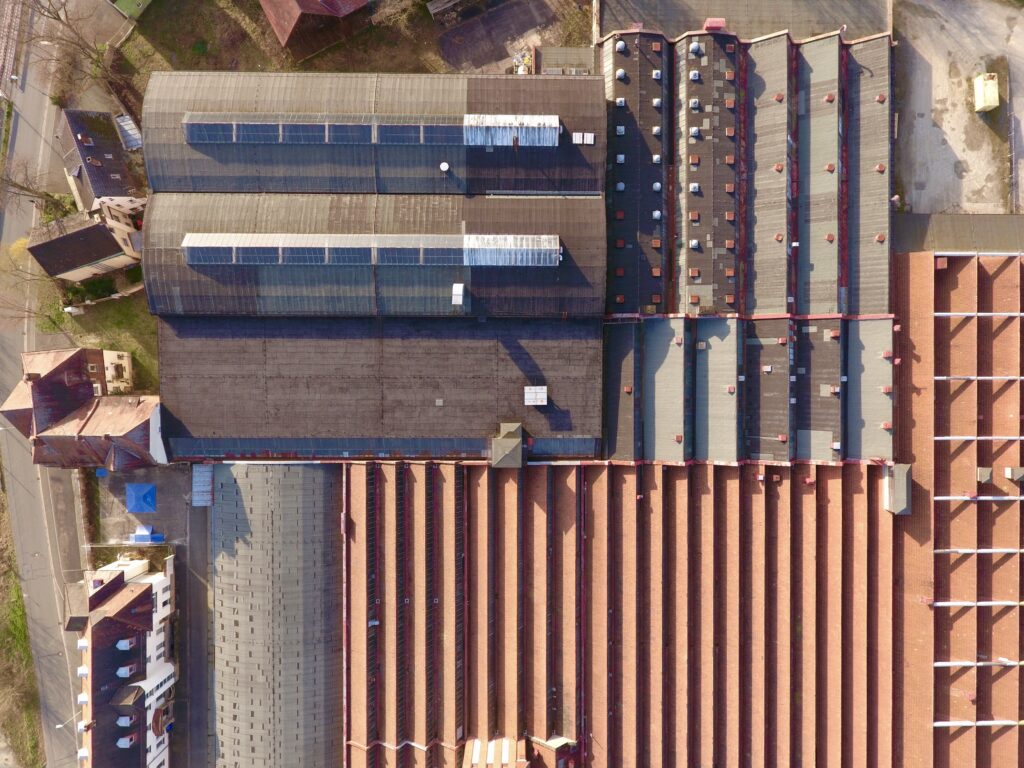
For large areas and the places that are hard to reach. Drone surveying
Tall buildings and unreachable structures call for laser scan point clouds to be combined with photogrammetric point clouds from drone imagery.
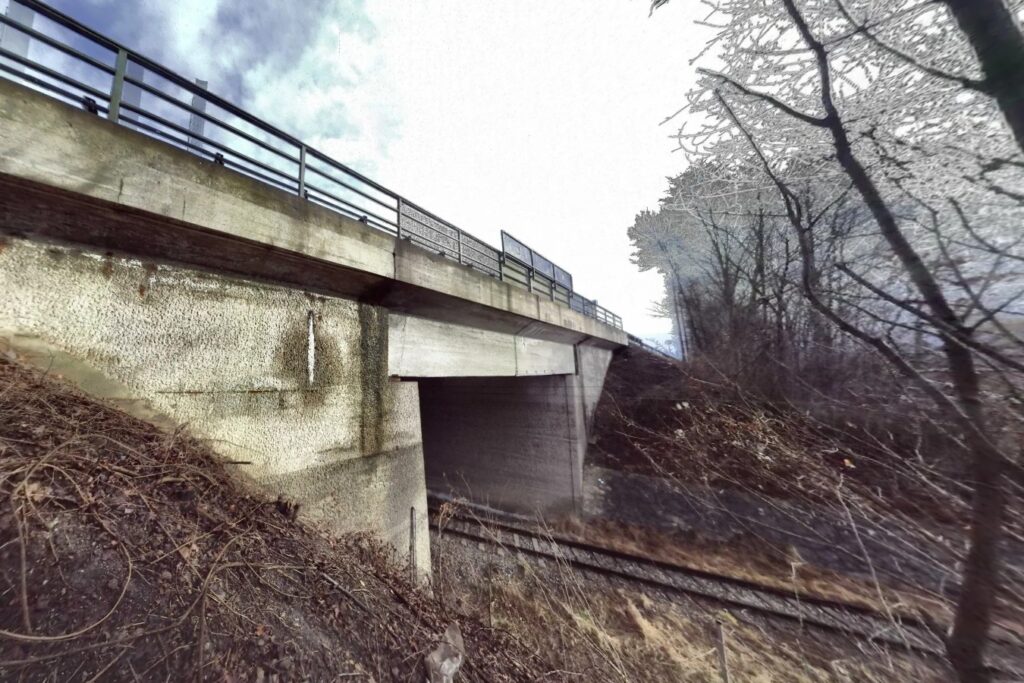
Cloud-to-cloud registration algorithms ensure excellent accuracy in the combined point clouds. Structures with difficult access, such as bridge substructures, are inspected with the help of UAV imagery.
Drone imagery also makes producing digital terrain models of large areas a quick job. For new-build planning or during construction work, it allows earthwork volumes in particular to be tracked.
Specialised BIM solutions 3D bridge modelling
Modelling bridge structures professionally takes more than CAD skills. Complex load-bearing systems, variable cross-sections and demanding alignments call for specialist engineering knowledge. We build precise BIM models for your bridge projects — with an understanding of structural detail and how the forces run.
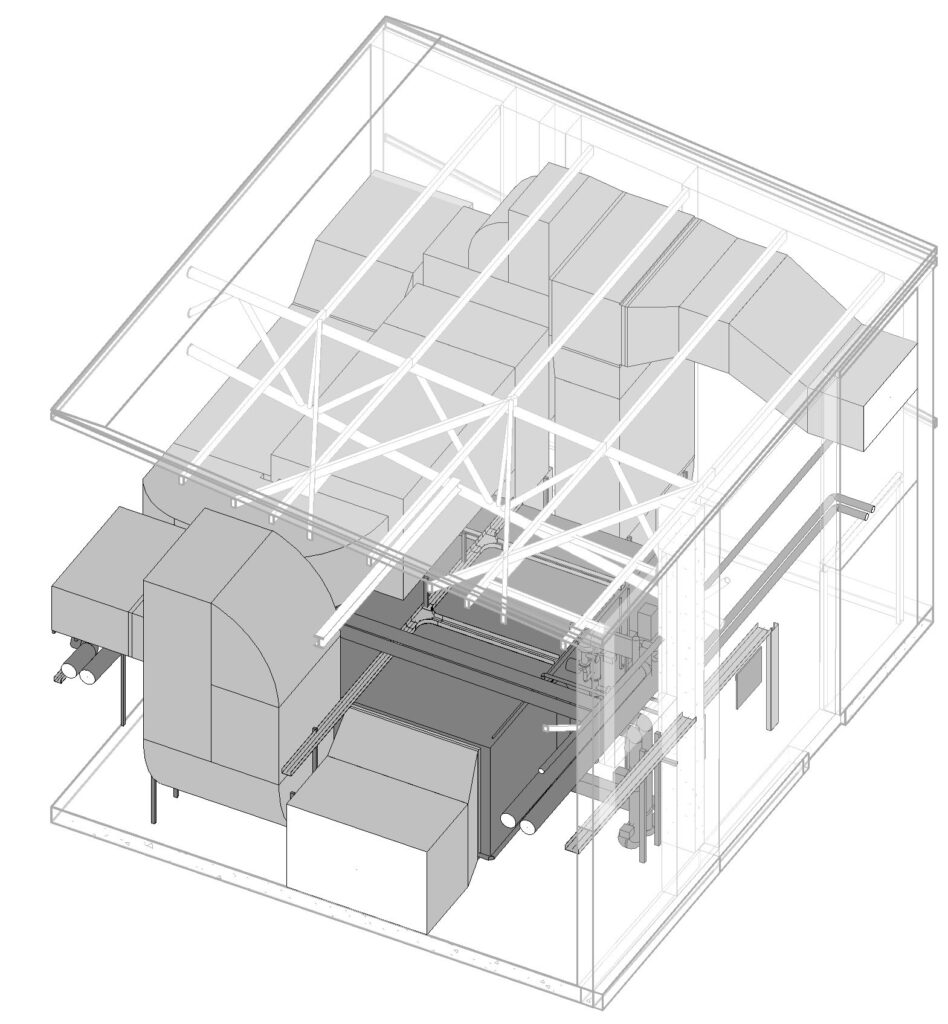
The services inside the existing building MEP modelling
Pipes, ducts and routes out of the point cloud, at the depth your services engineer specifies. Building services conceal themselves, so we combine stationary and hand-held devices and get between and behind the installations as well. The effort follows the number of components, not the floor area.
The other half of your as-built data Room book
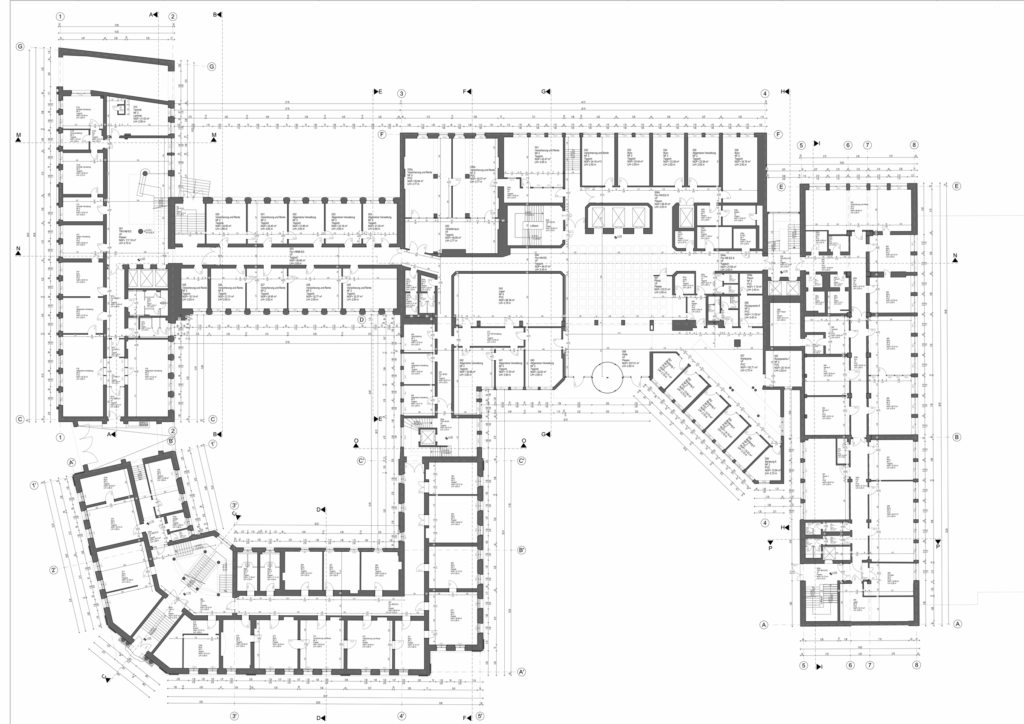
The as-built drawing shows where a room is. The room book records what it is: number, use, finishes, heights, doors, windows, fixed equipment. No CAFM system runs without that list. We collect it during the same visit as the geometry and hand it over vendor-neutral.
Which area applies, and when? Area calculation
For the same building, DIN 277, the German Living Space Ordinance and MF-GIF produce different figures. That is not a contradiction but a question of purpose. We fix the rule before the calculation and note it in the title block — an area figure without its rule carries no weight in a dispute.
Measurable like a drawing, readable like a photograph Orthophoto
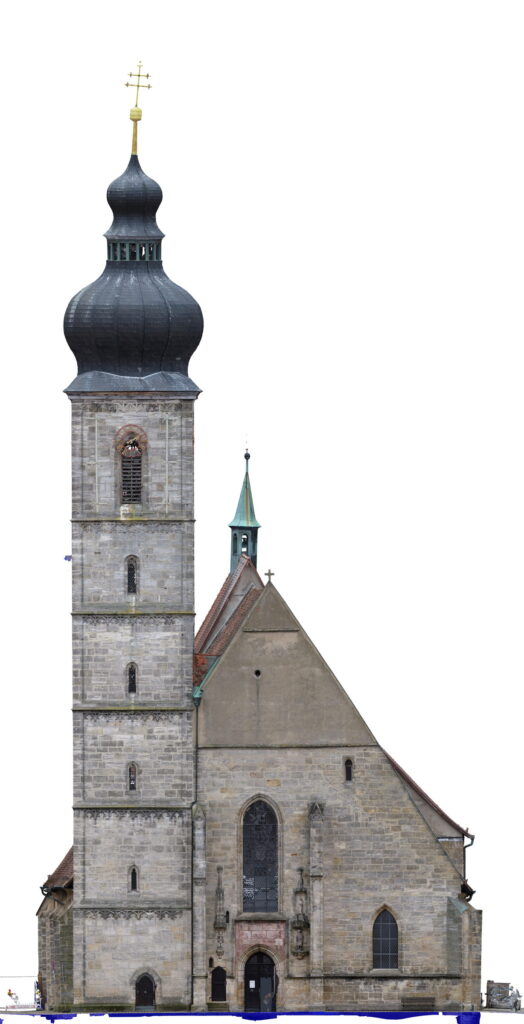
An orthophoto is to scale and free of distortion: you can measure in it as you would in a drawing while reading the actual condition — cracks, efflorescence, patch repairs. For condition documentation on roofs and façades, for heritage conservation and for dated evidence.
Heights as an agreed measurement Terrain model
A terrain model represents the ground without vegetation; a surface model represents everything standing on it. Which one you need depends on the question behind it: volume calculation needs one, shading analysis the other. Where the free state survey data is good enough, we say so — and where it is not, we say that too.
Replanning means planning against what is there Factory and layout planning
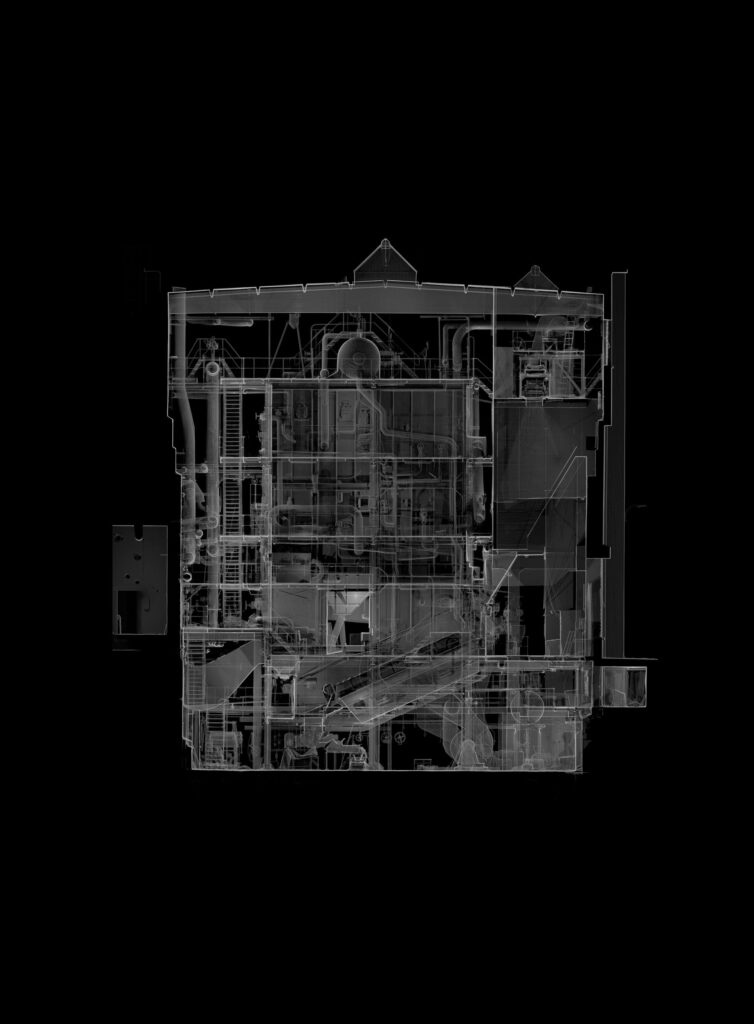
Column grids, clear heights, doors, media, machines: a layout rarely fails on the concept and often on a dimension nobody checked. We survey the hall while it stays in use and deliver the actual layout so that your planning software reads it in without rework.
When no designer has been appointed Planning in existing buildings
Refurbishment, conversion, change of use and adding storeys — designed on an as-built survey we produced ourselves. From the feasibility check through the design to the approval documents, and on request further to the construction drawings. If your project already has an architectural practice, we stay in our usual role: we supply the data, the design happens there.
Before the wall is closed Construction progress documentation
Often only a few days lie between laying a service run and closing the wall. After that, what is in there can no longer be established — unless it was surveyed beforehand. We document the course of construction at agreed intervals, component by component and with a date.
Did it go as planned? As-built comparison
Buildings rarely turn out exactly as they were drawn. What matters is not that something deviates, but where and by how much — and whether it makes any difference. The as-built comparison answers that with figures rather than impressions, stating the tolerance for each component.
The building as a data model BIM as-built models
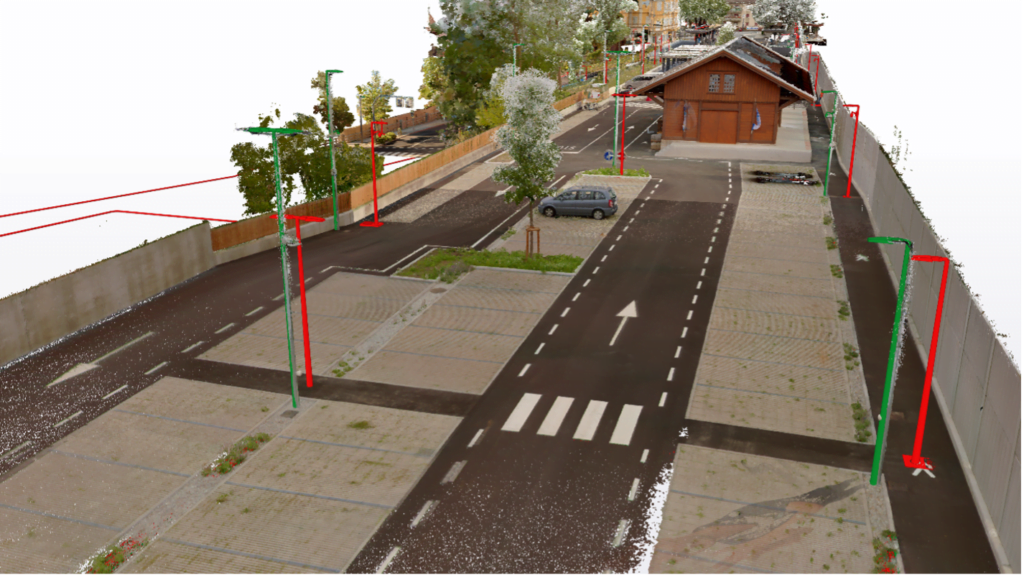
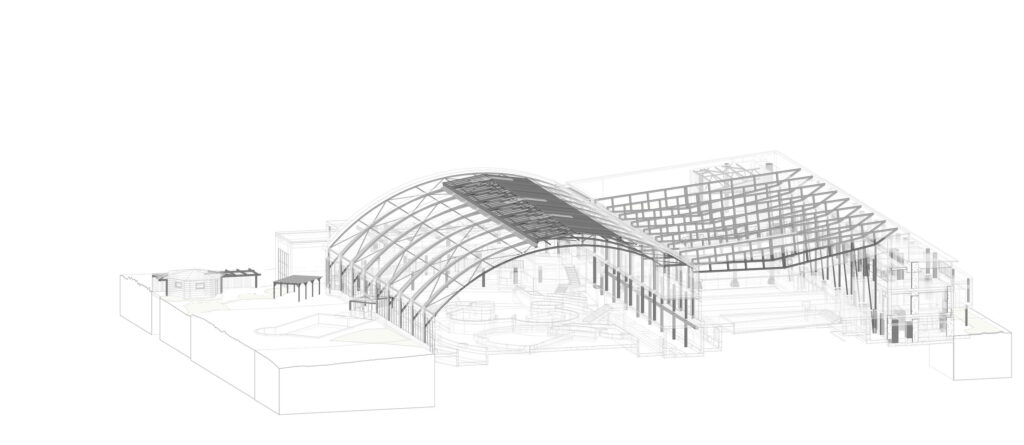
An as-built model consists of components rather than lines: a wall is a wall with thickness, height and material. We model from the point cloud at LOD 200 to 300, structured by architecture, structure and building services, native in Revit or ArchiCAD and vendor-neutral as IFC. Checking is against the survey, not against an impression.
Sustainability and evidence
Certification, simulations and life-cycle assessments on an existing building all compute on the same geometry. We capture it anyway — and that is what this group is built on.