



DGNB consultingCertification is a data question. We have the data and the auditor.
Every piece of evidence for DGNB or the German QNG seal needs the same thing in the end: dependable data about the building. Anyone starting from a paper drawing starts from zero. Anyone starting from a verified as-built model is halfway there.
Certification is a question of data
The catalogue asks for areas, components, materials and uses. Anyone assembling that information from a paper drawing spends most of the project on procurement rather than assessment.
We therefore start with the capture and not with the catalogue. What comes out of it also carries the other evidence in this group.
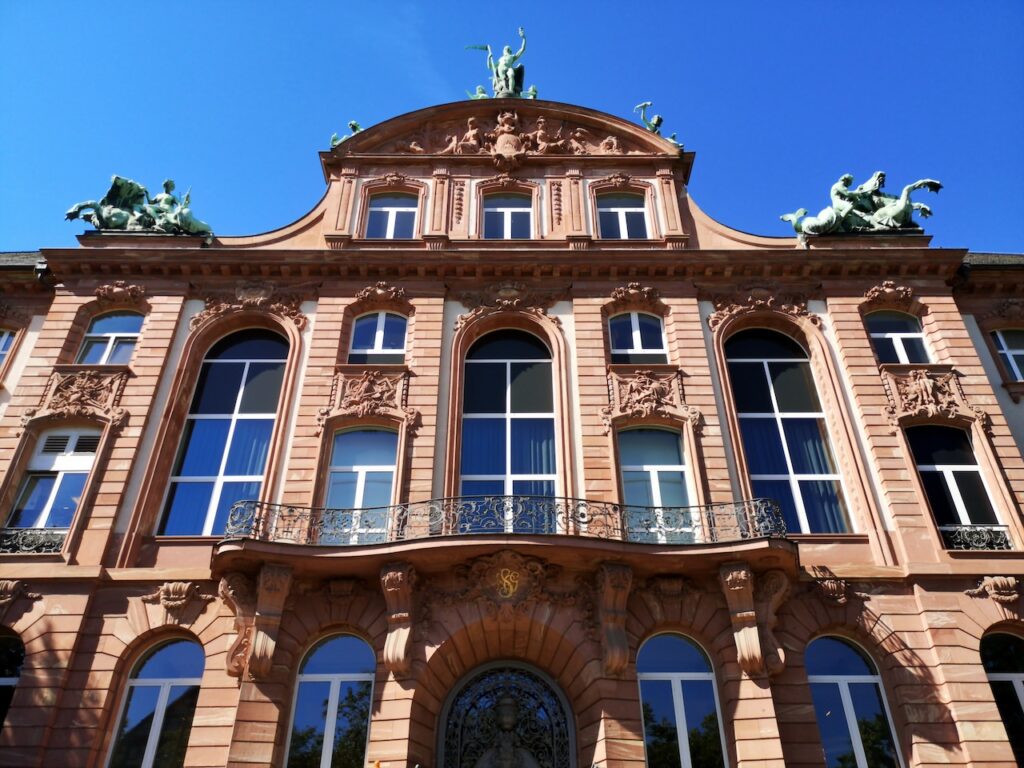
Data instead of a paper drawing
The scan and the as-built model are the starting point, not the result. Life-cycle assessment, life-cycle costs and the daylight study all compute on the same geometry we capture anyway.
An auditor in-house
One point of contact for the data and for the audit. Classic auditors advise but do not produce a data basis.
Moritz Pensel, DGNB auditor.
Sustainability does not necessarily mean higher cost. The approach brings ecological and economic objectives together instead of playing one off against the other: buildings that are environmentally sound and pay for themselves.
Evidence from the model
Life-cycle assessment, life-cycle costs, daylight and the deconstruction concept all come from one source. What is in the model does not have to be collected twice.
Standard refurbishment
The normal case: the refurbishment is certified and funded on that basis. From a single building to a major project.
- Life-cycle assessment per refurbishment scenario
- Construction support across the cycles
- Evidence from the as-built model
Serial refurbishment
A building type series or a city block: the same certification logic, plus a survey that supports prefabrication.
- Façade geometry within prefabrication tolerance
- Roof and surroundings by drone
The route to the certificate
Consultation
A preliminary assessment of the existing building: what is achievable, what it costs in effort, where the hurdles lie. The result is a basis for decision, not a promise.
Design
The evidence is produced on the model. Life-cycle assessment and life-cycle costs compute against scenarios, not against assumptions.
Implementation
Recurring scans keep the model current during the works. The same data later supports operation.
What we take on
The building blocks can be booked individually. The order follows from the project, not from a package.
Preliminary assessment
An appraisal of the existing building before effort is incurred. It answers whether certification carries for this building.
Certification support for DGNB and QNG
From the application to the handover of the documents, in coordination with the design.
Evidence from the model
Life-cycle assessment, life-cycle costs, daylight study and deconstruction concept from the captured geometry.
Construction support
Recurring captures during the construction period, as a target/actual comparison and record.
Capture and audit from one source
Normally a client commissions two trades: one that captures and one that certifies. Between the two lies an interface, and that is where the weeks arise that nobody allowed for in the certification schedule: areas to the wrong reference, a room book without the attributes the evidence needs, a model showing the design state instead of the built one.
With us that interface disappears. The capture is tailored to the evidence logic from the start: the area schedule stands on the same DIN 277 polygons as the room book, the ongoing construction documentation counts towards criterion ECO2.7 in the new-build system (2023 version), and the studies for the refurbishment certification come out of the same geometry.
In detail in the article as-built survey and DGNB audit from a single source.
Funding
Refurbishments that come with a certificate can receive state funding. That applies to the individual refurbishment as much as to the serial one.
We are not energy efficiency experts and do not take on their work. What we supply is the data basis and the certification support.
Funding potential check for housing portfolios
Whether the route via certification is worthwhile for your portfolio depends on the building type, its condition and the target system. We assess that in conversation, before you commission anything.
The assessment is not a funding commitment.
Frequently asked questions
What is the difference between DGNB and QNG?
QNG is a state seal, DGNB a method approved for it. Anyone wanting the funding conditions for sustainability needs the seal; the route there runs through a recognised system.
Can an existing building be certified retrospectively?
Yes. The certification attaches to the refurbishment, not to new build. The precondition is that the existing building is dependably documented.
What if no current drawings exist?
Then it starts with the capture. The scan and the model produce the documents the evidence later computes on.
From what size is it worthwhile?
The cost of a certification is largely independent of the size of the building. On small individual properties it therefore rarely pays for itself.
Can evidence be generated directly from the model?
Life-cycle assessment and life-cycle costs compute on the quantities and components of the model. For the final balance it has to reflect the as-built state, not the design state.
More in this group
These services build on the same capture. Anyone who needs one of them usually needs a second.
Talk to us
We look at your building and tell you what is achievable.