


What is BIM?
The comprehensive guide to Building Information Modeling.
Building Information Modeling (BIM) has transformed the construction industry and is today the standard for modern, digital design processes. In this article you will learn what BIM actually is, how it works and what benefits it offers everyone involved in a project – from architects and engineers through to developers and project developers.
1. Introduction to BIM
Building Information Modeling, BIM for short, is far more than a 3D model of a structure. It is an integrated digital design method in which all the relevant information about a construction project is brought together in a central, virtual model. Every component in the model is not only represented geometrically but also carries detailed information and attributes. These attributes can cover material properties, dimensions, costs, delivery times and much more – essential data that supports the entire design and construction process.
2. The basics and how BIM works
At its core, BIM rests on the idea that all design, construction and operating information about a structure is united in one shared digital model. Unlike traditional 2D drawings, which are often produced and managed in isolation, BIM makes possible:
- Central data management:
Everyone involved in the project – from architecture through structural design to building services – works on a shared platform, often in the form of a construction cloud. - Data enrichment:
Every component carries extensive information. Material properties, manufacturing details, cost factors and maintenance information, for instance, are always available. - Multidimensional planning:
Alongside the 3D model, time (4D) and cost (5D) can be integrated. This allows a precise simulation of the construction sequence and exact quantity take-off as a basis for tendering. - Automated clash detection:
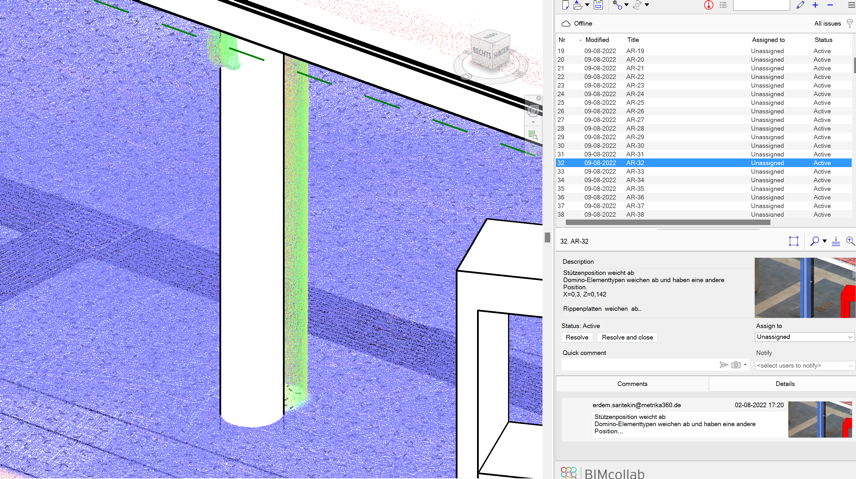
Through the continuous comparison of the different trades, clashes and coordination problems are recognised and resolved as early as the design phase – before they can cause delays on site.
The combination of all these elements makes BIM a powerful tool that optimises the entire value chain of a construction project.
3. The benefits of BIM
BIM offers numerous benefits that are indispensable in today’s dynamic construction industry:
- Greater transparency and efficiency:
Central access to current, complete project data lets everyone involved work faster and more precisely. This reduces coordination errors and rework.
- Optimised collaboration:
Integrating the different specialist disciplines in one shared model encourages interdisciplinary cooperation. Design decisions are better founded, because all the relevant data can be called up at any time.
- Savings in cost and time:
Precise quantity take-off, automated checking procedures and the simulation of the construction sequence in a 4D environment considerably shorten design and construction times. This brings substantial cost advantages that show directly in the delivery of the project.
- Improved quality assurance:
The continuous updating and validation of the data in the BIM model contributes to greater design accuracy and long-term operational reliability.
4. BIM in practical use
In the daily course of a project, the real added value of BIM shows itself. Architects, engineers and construction companies benefit from a continuous flow of information and can therefore respond efficiently to changes and challenges. The automated clash check and continuous quantity take-off make it possible to calculate the actual effort precisely. This is the basis for transparent tendering and reliable cost control – decisive factors in an industry that grows ever more competitive.
The BIM method we apply ensures that every component in the model carries the necessary information to support all the relevant decision-making processes. The data serves not only designbut also the later management and maintenance of the structure, which benefits the entire life cycle of a project.
5. Conclusion: BIM – the key to modern construction design

Building Information Modeling (BIM) is more than a mere technical advance – it is a change of paradigm in construction design. By bundling all the relevant information in a central digital model , collaboration between everyone involved is considerably improved. The greater transparency, more precise planning and the ability to steer the construction sequence in several dimensions make BIM an indispensable instrument for modern construction projects.
With BIM you commit to an integrated information management process that not only shortens design and construction times but also ensures long-term cost savings and high quality . In an industry increasingly shaped by efficiency and sustainability, BIM offers the decisive competitive advantage.
By using BIM you create the basis for a forward-looking design practice that is equal to the challenges of the modern construction industry – from the first concept phase through to operation and facility management. Discover how BIM can make your next project more efficient, more transparent and more economical .
With this comprehensive guide to BIM (Building Information Modeling) you are well informed – both in technical terms and as regards the practical benefits this method offers the construction industry as a whole.