


From point cloud to digital twin: how modern 3D surveying is transforming bridge modelling
Digitalising bridge structures faces a fundamental challenge: most of Germany’s infrastructure exists only as 2D drawings, or without any current documentation at all. At the same time, modern design and refurbishment processes call for precise BIM models. The answer? An intelligent combination of 3D laser scanning and specialist engineering expertise.
What makes bridge structures particularly complex
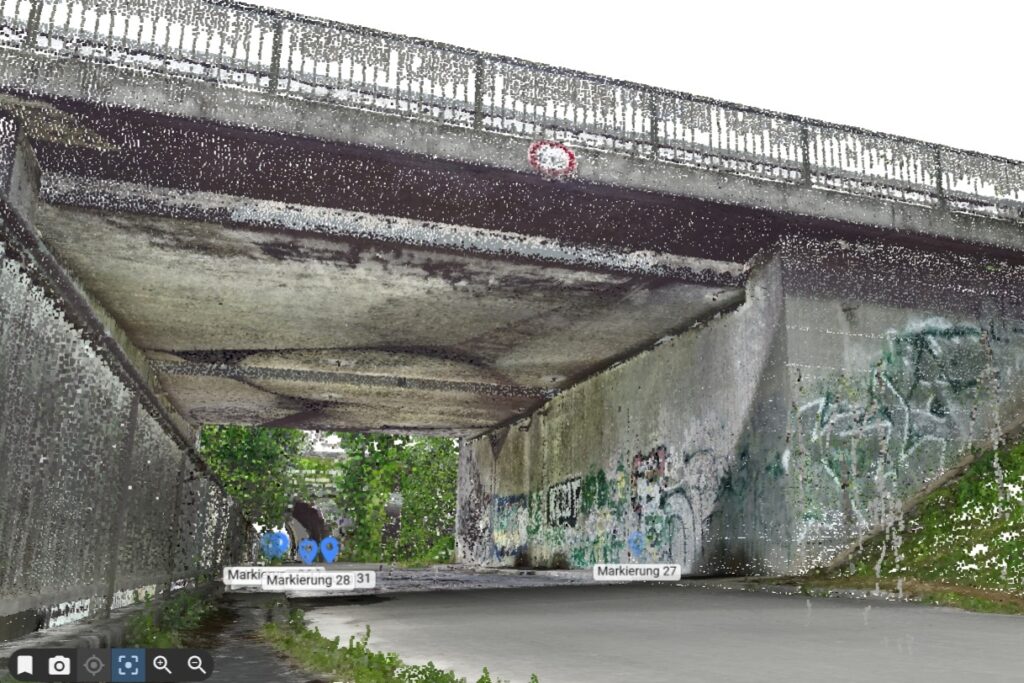
Bridges are not ordinary buildings. As linear load-bearing structures with curved alignments, variable cross-sections and complex geometry, they place the highest demands on digital capture and modelling. Where building construction is often dominated by standardised geometries, every bridge calls for individual solutions – from the slab bridge to the cable-stayed design.
This geometric complexity makes manual remodelling a costly, time-consuming undertaking. This is where modern surveying technology comes in: millimetre-accurate 3D laser scanning captures reality in all its complexity and creates the basis for precise digital models.
From reality to the BIM model
1. Precise data capture through combined methods
Capturing bridge structures well often calls for a combination of technologies:
- Terrestrial laser scanning for the highest accuracy on static structures and hard-to-reach areas
- Mobile mapping for efficient capture of large areas with automatic orientation in space
- Drone survey for documenting bridge decks and inaccessible components
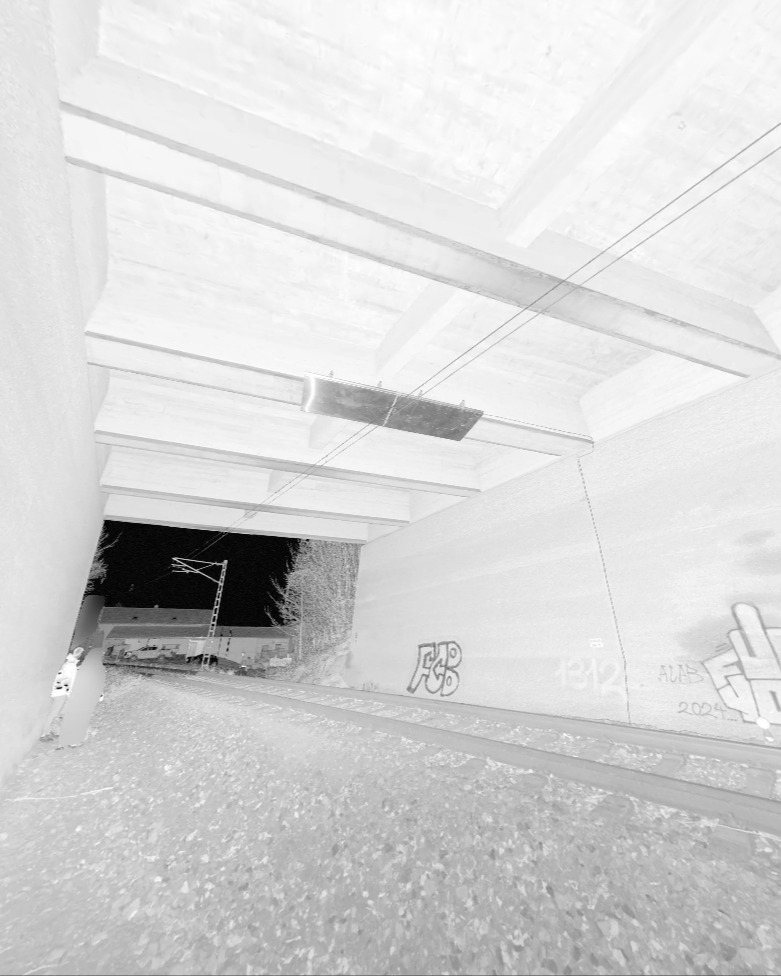
This combination of methods makes it possible to capture even the most complex structures completely – from the abutments and piers through to the superstructure and constructional details.
2. Intelligent data processing with engineering judgement
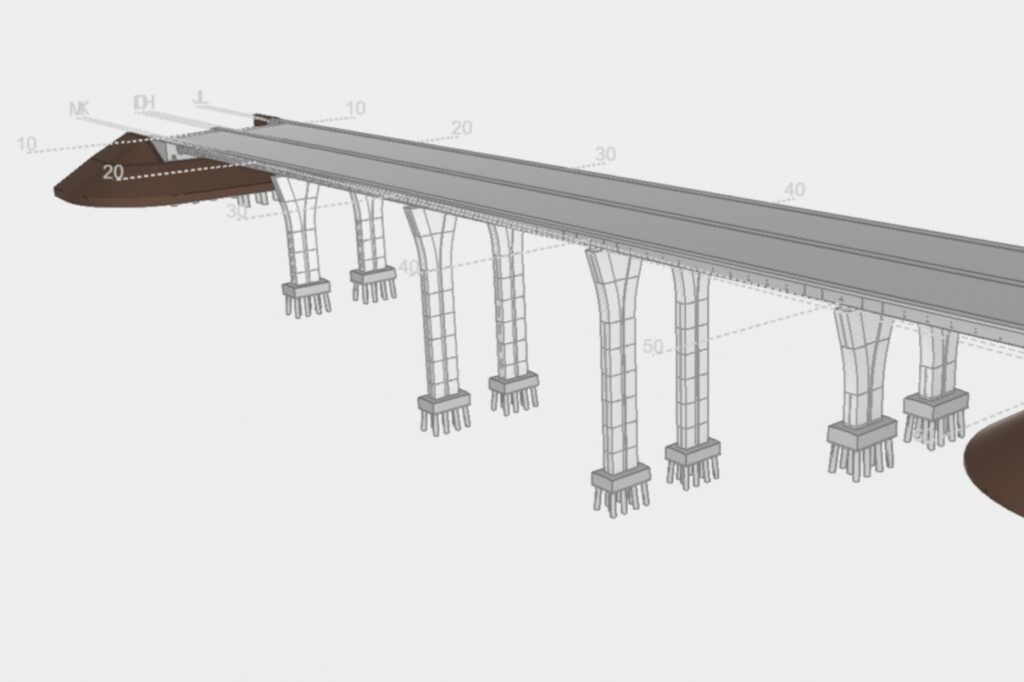
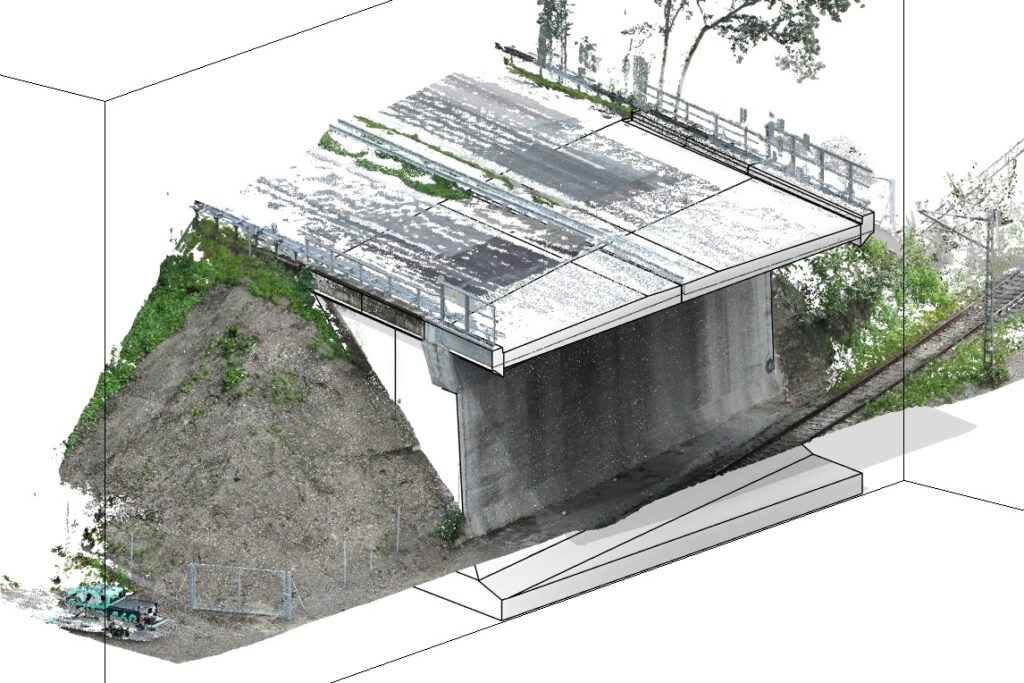
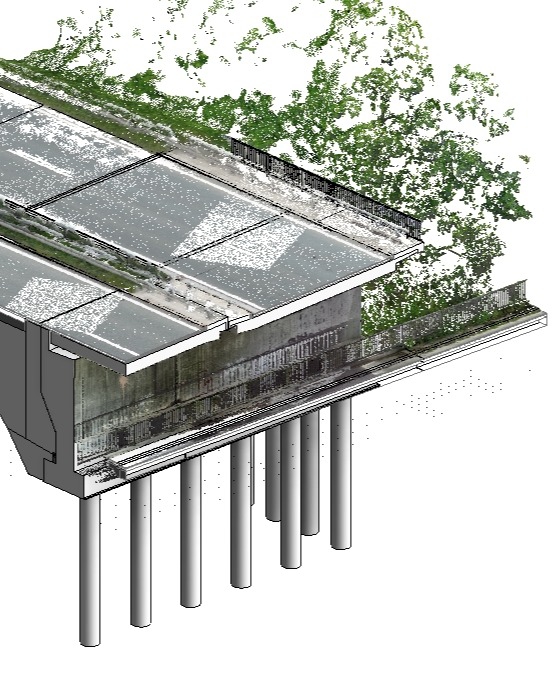
The challenge lies not only in the capture, but above all in interpreting the scan data correctly. Structural elements have to be extracted from millions of measured points and carried over into parametric BIM models. This calls for:
- Systematic analysis of the point clouds with an understanding of structural logic
- Identification of components despite occlusions and interference
- Reconstruction of elements that are not visible, based on engineering knowledge
- Integration of existing as-built drawings to complete the models
3. Structured BIM modelling for the whole life cycle
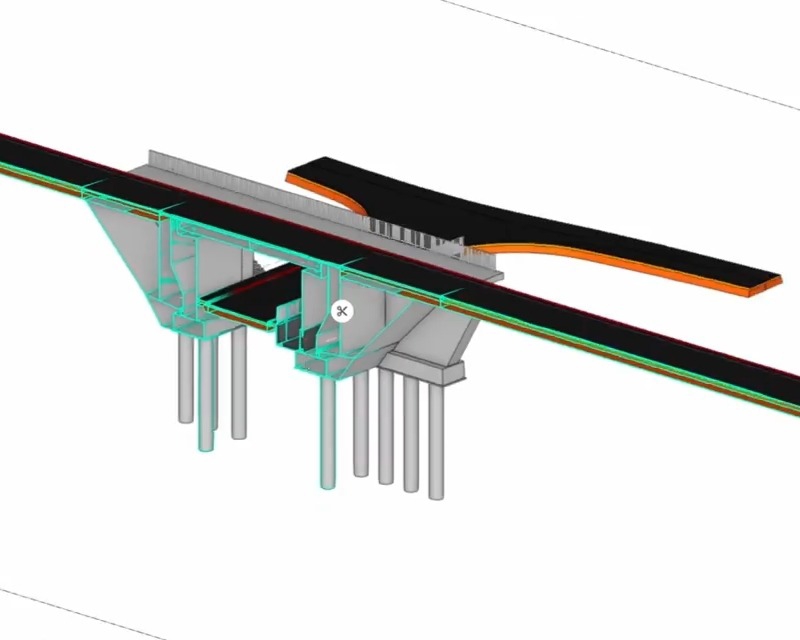
The result goes far beyond mere 3D visualisation. Every component carries its specific properties – from material parameters through cross-section values to constructional details. This structured data capture makes possible:
- Efficient refurbishment planning through exact as-built documentation
- Precise clash checks for conversions and extensions
- Continuous monitoring through the integration of inspection data
- Optimised facility management across the entire life cycle
Specialist expertise through strong partnerships
For the demanding modelling of bridge structures we work closely with Anton Schlei of Werner und Schlei Ingenieure. With his long experience in bridge construction at Max Bögl, our partner practice brings exactly the specialist know-how needed for the correct interpretation and modelling of complex load-bearing structures. This combination of state-of-the-art measurement technology and deep engineering expertise guarantees BIM models that are not only geometrically precise but also fully reflect the structural logic and the load-bearing requirements of bridges.
Practical applications from the field
As-built capture for refurbishment projects
When historic bridges are refurbished, current drawings are often missing. Combining laser scanning with the old documents that exist produces complete digital models that record all deformations and structural changes. This creates certainty in planning and avoids costly surprises during construction.
As-built checking on new-build projects
Modern infrastructure projects call for continuous monitoring of the work as it is built. Comparing the BIM design against the laser scan data reveals deviations early and allows timely correction. For public clients in particular, this is increasingly mandatory.
Digital twins for predictive maintenance
Linking BIM models to real-time data from IoT sensors creates living digital twins. These enable predictive maintenance of critical infrastructure and extend the life of the structures while optimising operating costs.
The future of infrastructure digitalisation
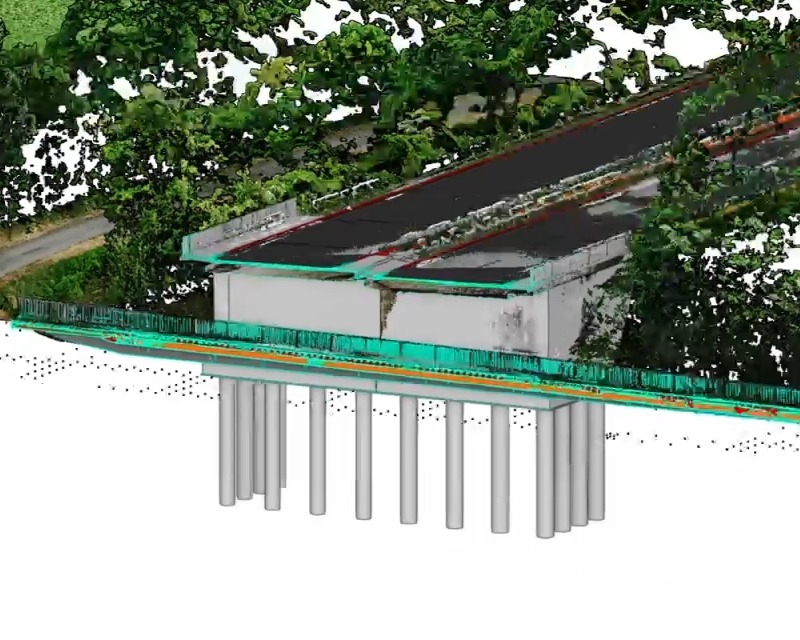
Development does not stand still. Current research on “scan-to-BIM-to-sim” goes beyond mere model creation and allows simulations and real-time analyses to be integrated directly. Artificial intelligence increasingly supports automated component recognition and speeds up the modelling process.
For operators of infrastructure assets this means: investment in precise 3D surveying and BIM modelling pays off across the entire life cycle – through reduced design risk, optimised maintenance cycles and a sound basis for future decisions.
Your partner for bridge digitalisation
Digitalising bridge structures takes more than technical competence – it demands the interplay of state-of-the-art measurement technology, specialist engineering knowledge and efficient processes. At Metrika360 we bring these elements together into tailored solutions for your infrastructure projects.
Whether as-built capture by laser scanning, creating BIM models from 2D drawings or developing digital twins – we accompany you on the way to the digital future of your structures.
Get in touch for a no-obligation conversation about your bridge project. Together we will find the right digitalisation strategy for your infrastructure.