


DIN 277 or Living Space Ordinance: which area applies when
For the same building, DIN 277 and the German Living Space Ordinance (WoFlV) produce different figures. That is not a contradiction but a question of purpose: DIN 277 describes floor areas in building construction, the WoFlV determines the living space for rental and purchase contracts.
The same flat, two figures
Whether a sloping ceiling counts and how a balcony is weighted is decided by the rule, not by the drawing. The floor plan is the same; the result is not.
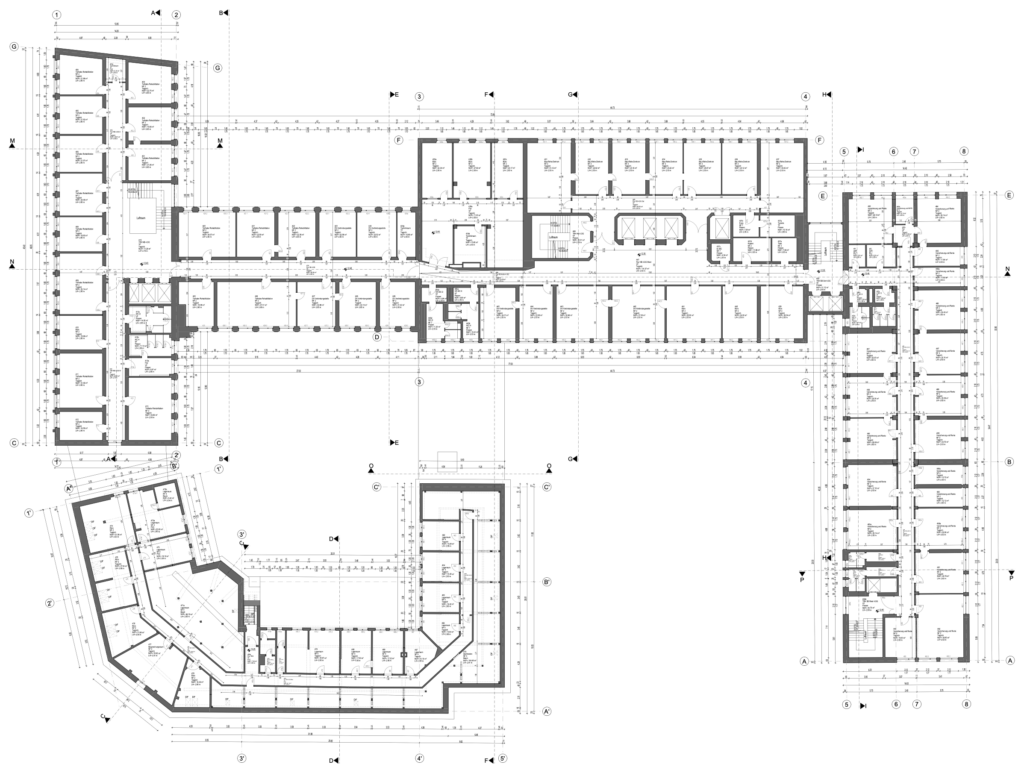
Where the results diverge
The differences arise at the same three points:
- Sloping ceilings. The WoFlV counts areas with low headroom only in part or not at all. DIN 277 has no such grading.
- Balconies, loggias, terraces. The WoFlV usually counts them in part. In DIN 277 they are floor areas in their own right.
- Ancillary rooms. Cellar rooms and storerooms outside the flat do not count towards the living space, but they do count towards the floor area to DIN 277.
Which figure you need
- Rental or purchase contract for residential space – WoFlV.
- Commercial lettable area – the MF-GIF guideline, not the WoFlV.
- CAFM, operating costs, maintenance, tendering – DIN 277.
In practice, residential properties often need both figures. They can be derived from the same survey if this is established before capture.
How the Living Space Ordinance calculates
The ordinance grades by clear height. Areas below one metre in height are disregarded, areas between one and two metres count half, from two metres in full. That is why an attic flat comes out considerably smaller under the WoFlV than under DIN 277.
Balconies, loggias, roof gardens and terraces are usually counted at a quarter, at most at half. Which share applies depends on the quality of the area and is therefore an assessment, not a measurement. This is exactly where most disputes arise.
For the measurement itself: measurements are taken at the inside edges, skirting boards and claddings are disregarded, and fixed built-in items are not deducted.
Where the ordinance comes from
In 2004 the Living Space Ordinance replaced the Second Calculation Ordinance (II. BV). For older contracts the earlier rule may still be decisive, which is why for existing properties the question of the contract date comes before the question of the area. Anyone determining a living space anew should therefore state which rule the calculation followed.
Why the difference can become expensive
In a tenancy, the living space is not a description but a warranted characteristic. If the actual area deviates significantly from the one stated in the contract, this has consequences for the rent and the service charge statement – retroactively over the term of the contract.
That is why the sequence pays off: first decide which rule applies, then survey, then calculate. A later conversion is possible, but needs height data per room – it is in the room book, provided it was agreed before the survey.
Frequently asked questions
Why do DIN 277 and the Living Space Ordinance differ?
Because they serve different purposes. The WoFlV assesses what is actually habitable and therefore counts sloping ceilings and balconies only in part. DIN 277 describes floor areas regardless of usability.
Which standard applies to commercial lettable areas?
Neither: the MF-GIF guideline is customary there. The Living Space Ordinance applies exclusively to residential space.
Can both figures be obtained from one survey?
Yes, provided the requirement is known before capture. Both calculations can be derived from the same point cloud – doing so afterwards takes more effort, because additional height data is needed.
How are sloping ceilings counted?
Graded by clear height: below one metre not at all, between one and two metres at half, from two metres in full. DIN 277 has no such grading and shows the entire floor area.
Does the balcony count towards the living space?
Usually at a quarter, at most at half. Which share is applied depends on the quality of the area – that is an assessment and the most frequent point of dispute in living space calculations.
What applies to an old tenancy agreement?
Possibly still the Second Calculation Ordinance, which was replaced by the Living Space Ordinance in 2004. For existing properties, the question of the contract date therefore comes before the question of the area.